
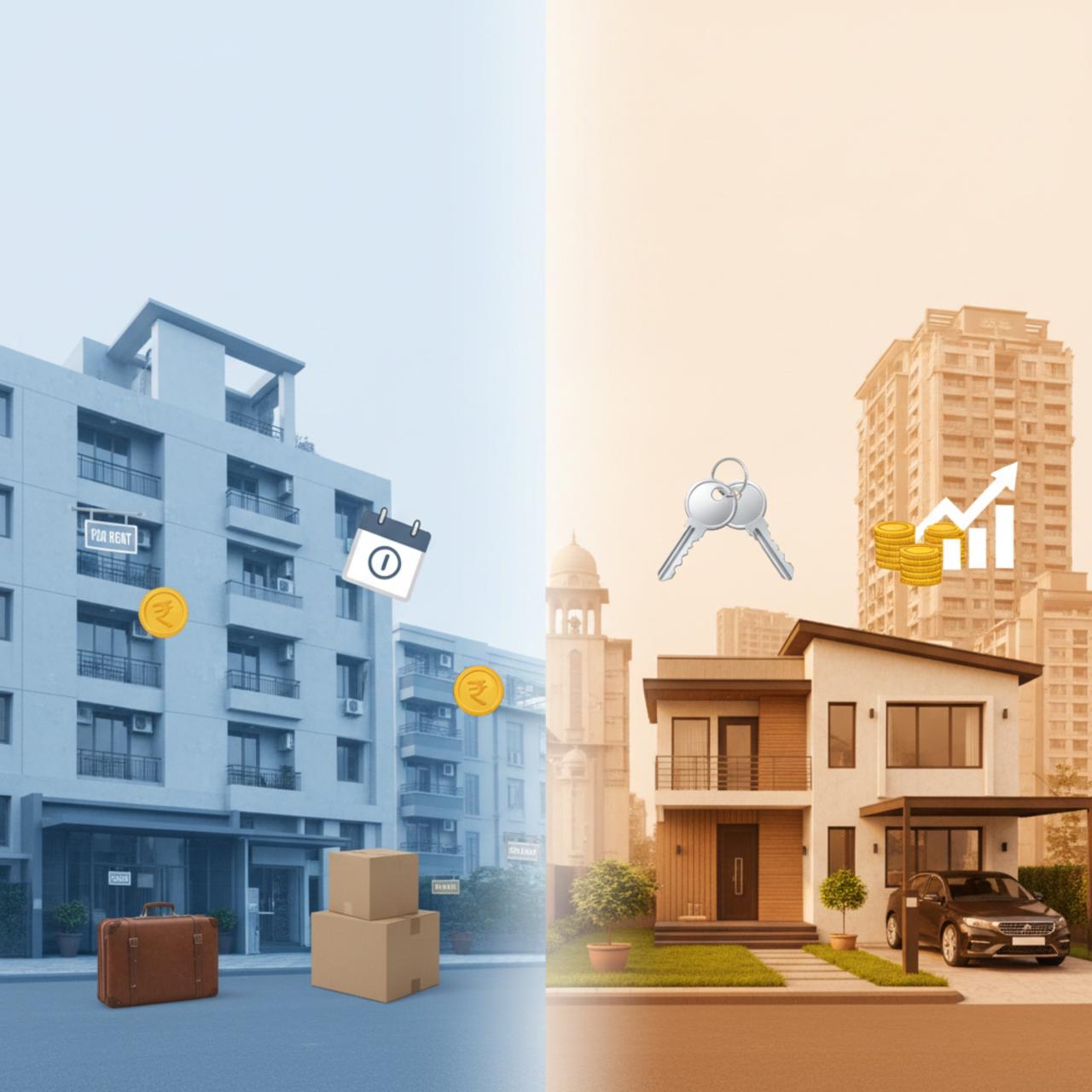
Buying a home is a dream for almost every Indian Family, but today's reality makes the decision tougher than ever. Nowadays, property prices are high, lifestyles are changing, and people want financial freedom. In the middle of all this, one question keeps coming back:. “Should I keep renting, or is it finally time to buy a home?” What makes this decision even more challenging is that both options appear right and wrong at the same time. On the one hand, renting feels flexible and affordable, and on the other hand, buying a new one feels secure and emotionally fulfilling. So, whatever you choose, this article, we can discuss about it.
Renting a Home: Flexibility with Freedom
Introduction to Renting:
Renting a house means living in a property owned by someone else and paying a fixed rent regularly. It's a popular choice for people who
need flexibility, lower upfront costs, or shorter-term housing. Renting is common among students, young professionals, and families for those who are still exploring their long-term living options. Cities like Bangalore, Mumbai, Pune, and Hyderabad are the major cities where people prefer to rent houses due to the high cost and living.
Advantages of Renting a Home
1) Flexibility to Move
In renting, you have the advantage of flexibility, which means you can relocate easily for jobs, studies, or lifestyle changes without worrying about selling a property. This mobility is perfect for people with changing life plans. Many people who are doing jobs in other states, so it will help them to move properly, as compared to
own house.
2) Maintenance and Repairs Handled
In most rental agreements, the landlord is responsible for major repairs, saving renters both time and money. This saves renters both time and money, allowing them to focus on work, studies, or family rather than home maintenance.
3) Financial Freedom
With no long-term loan obligations, renters have more freedom to invest or save money for other priorities.
Disadvantages of Renting
1) No Asset Creation
Rent payments do not contribute to ownership or building any property asset. Over time, you are paying for a home that doesn’t belong to you.
2) Rent Increases Over Time
Landlords may raise rent periodically, which can increase your living costs unpredictably.
3) Limited Customisation
Renters usually cannot make major changes or renovations to the property, which can affect comfort or personalisation. Simple things like painting walls and installing a modular kitchen often require landlord approval, which can limit how comfortable your home feels.
4) Less Stability
Renting offers flexibility but comes with less long-term security, as leases may not be renewed or landlords may sell the property.
Buying a home: Own a home with freedom
Introduction to buying a home
Buying a home is one of the biggest financial and emotional decisions in an Indian household. Owning a house gives a sense of stability, security, and pride. When you buy a property, every EMI you pay gradually builds your own asset over time, instead of contributing to someone else’s income.
Advantages of Buying a Home
1) Long-Term Stability & Security
Owning a home means you do not have to worry about changing landlords, yearly rent hikes, or unexpected move-outs. Your home becomes a permanent place for your family, offering emotional and financial security for years.
2) Asset & Wealth Creation
Every EMI you pay builds equity, and over a period of 10 to 15 years, it turns into a major asset one that you can use for resale, earn rental income from, or even use as collateral for loans.
For many Indians, property is the strongest and safest long-term investment.
3) Full Control & Customisation
Unlike renting, buying gives you the freedom to renovate, redesign, and upgrade according to your needs. Whether it's painting walls, installing modular kitchens, or making structural changes. Your property is only yours.
4) Future Appreciation
In the most urban areas, property values increase over time. Buying in a developing area can give excellent returns in the long term. Many homeowners see their property value double or even triple over a decade.
Disadvantages of Buying Property
1) High Upfront Costs
Buying requires a large down payment, along with registration charges, GST(for under construction), legal fees, and interior setup
costs. This can be a financial stretch for many family members, especially for first-home buyers.
2) Long-Term Financial Commitment
An EMI is usually a 10–20 year commitment or even more. This means you need a steady income and long-term financial discipline. Missing EMIs can affect credit scores and create financial stress.
3) Maintenance responsible
Maintenance responsibility is a major thing for everyone.
Homeowners must manage repairs, maintenance, society charges, property taxes, and other costs. Over time, house maintenance will increase. Water leakage, pipeline issues and so on.
4) Less Flexibility to Move
After purchasing a home, it is hard to move into new places because it takes complex planning, time-consuming client and real estate agent discussions, also convincing them in detail about the property, while renting is easier.
Conclusion
Choosing between renting and buying is not about which option is better. It is about which option is better for you. Renting gives you flexibility, lower initial costs, and freedom to move, making it ideal for people still exploring their career, location, or financial stability. On the other hand, buying a house offers long-term security, ownership, and the chance to build wealth over time.
In today's market, the smartest choice depends on your budget, lifestyle, job stability, and long-term goals. Take time to understand your priorities, calculate your finances, and think about where you see yourself in the next 5- 10 years.
Whether you choose to rent or buy, the right decision is the one that supports your growth, comfort, and financial peace of mind.
Disclaimer: Information shared is for general awareness only and may vary based on project details and market conditions. Readers are advised to verify details independently before making any property-related decision.
28 Aug 2025

29 Aug 2025

25 Aug 2025

06 Oct 2025
26 Aug 2025
 Login
Login
 Contact Us