
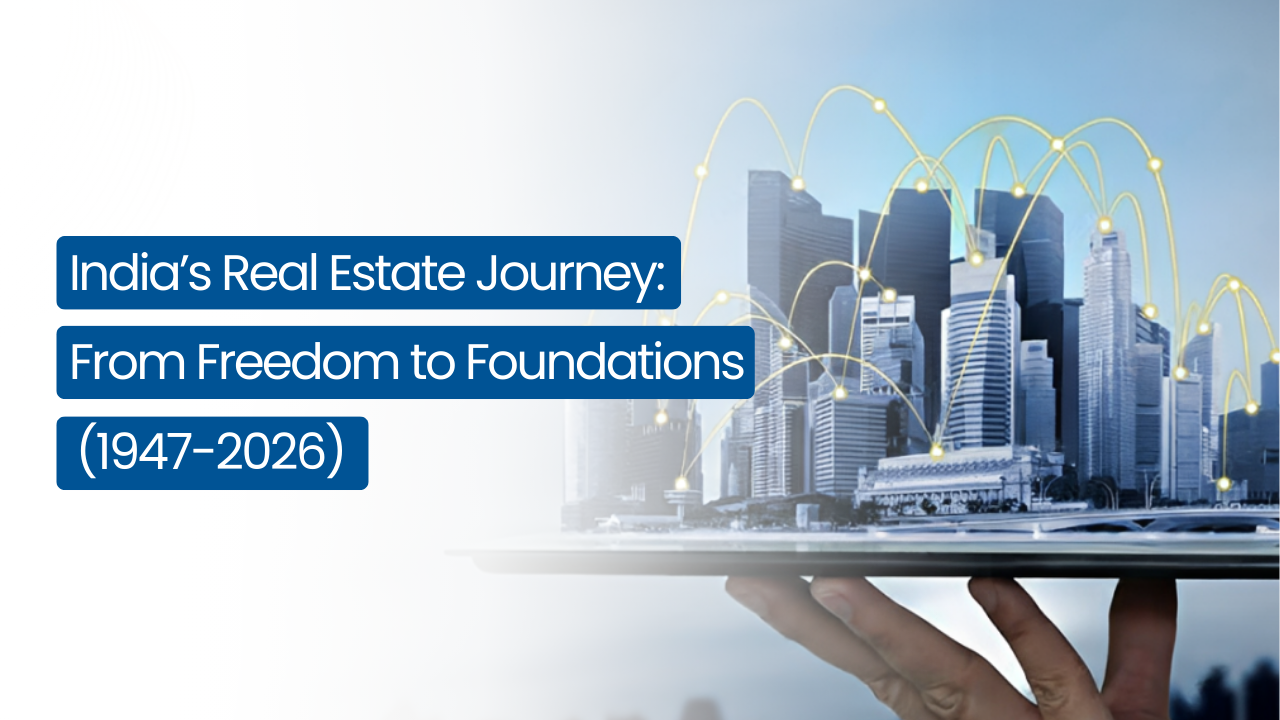
This Republic Day 2026, as India turns 77, let's take a look at the journey that often goes unnoticed, our journey of homes. After independence, people need shelters to live and survive. Over the years, these simple homes grew into modern apartments and a township. Each home tells a story of hope, struggle, and dreams. This is the story of how India built its cities, its communities, and the very foundations of life, one brick at a time.
When India became independent in 1947, millions of people were left without homes. Families who had lost everything during Partition had to rebuild their lives, often starting with just a small shelter. The government took the lead, creating houses, neighbourhoods, and small townships to provide safe spaces for people. Agencies like the Delhi Development Authority and state housing boards worked to give families a place to belong. Back then, homes were not about luxury, they were about safety, survival, and the hope for a better tomorrow.
By the 1960s, India was looking to grow its cities in a planned way. Cities like Chandigarh became symbols of modern India, with carefully designed roads, parks, and neighbourhoods. Also, the government continued to play a vital role in building homes and apartments, making sure people had safe and stable places to live. During this time, owning a home was seen as a lifetime achievement, and people trusted the system to provide security. Homes were still simple, but they represented stability, community, and the promise of a steady life.
During the 1980s, private builders began to play a bigger role in India’s housing market. Housing colonies and builder floors started appearing, giving people more options to own a home. The middle class began dreaming of better living spaces, with more comfort and modern facilities. Real estate slowly started to be seen not just as a place to live, but also as a way to invest for the future. Homes were becoming more than shelters; they were becoming symbols of hope, progress, and personal achievement.
Between 1991 and 2005, India’s real estate market experienced a major transformation. After the economic reforms of 1991, private builders started taking the lead in shaping cities. For example, in Mumbai, projects by builders like Oberoi Realty and Hiranandani began creating modern townships and high-rise apartments that were previously rare. Big cities such as Bangalore, Delhi and Pune saw rapid expansion, with new residential and commercial developments appearing almost every year. During this period, homes were no longer just shelters; they became investments and symbols of status, while NRIs also started investing in Indian property, further boosting the market. This 14-year span marked the shift of Indian real estate from need-based housing to aspirational living.
From 2005 to 2015, Indian real estate entered a phase of large and attractive projects. Big gated communities, high-rise towers, and township projects became common in cities like Gurgaon, Noida, Mumbai, and Ahmedabad. Builders promoted lifestyle living with promises of clubs, gardens, and modern facilities. For example, areas like Gurgaon’s Golf Course Road and Noida Extension saw rapid construction during this time. However, many buyers also faced delays, unclear timelines, and changing project plans. This 10-year period taught buyers an important lesson: beautiful promises were not always equal to timely delivery. It was the phase where trust began to weaken, and awareness slowly started growing.
From 2016 to 2025, Indian real estate went through its most important change. New rules like RERA brought more transparency and made builders more accountable. Buyers started asking questions, checking approvals, and understanding timelines before investing. The pandemic during this period also changed how people looked at home space, safety and comfort became more important than luxury. By 2025, buyers were more informed, careful, and confident. Homes were no longer bought on promises alone, but on clear information and trust.
As buyers became more aware, the need for clear and honest information also grew. This is where platforms like Exio play an important role. Exio helps people understand properties beyond attractive brochures by focusing on verified listings, real details, and practical insights that buyers usually hesitate to ask. Instead of pushing decisions, Exio supports informed choices, helping people compare, question, and decide with confidence. In today’s real estate market, clarity has become as important as location, and Exio works to make that clarity accessible to everyone.
As India celebrates Republic Day in 2026, the journey of real estate reflects the journey of the nation itself. From homes built for survival to homes chosen with awareness and confidence, India has come a long way. Today, the future of real estate is not just about bigger buildings, but about trust, transparency, and informed decisions. As buyers grow stronger and platforms support clarity, Indian real estate continues to stand on solid foundations. Because a strong nation is not built only with land and walls, but with informed people and honest choices.
Disclaimer:
This article is intended for informational and educational purposes only. References to cities, developers, government bodies, or platforms are purely illustrative and based on publicly available information. This content does not constitute legal, financial, or investment advice, nor does it promote or rank any specific entity.
28 Aug 2025
29 Aug 2025

25 Aug 2025
06 Oct 2025
26 Aug 2025
 Login
Login
 Contact Us